Atradius Atrium
直接存取您的保單資訊、信用限額申請工具及深入瞭解。

 香港
香港
 土耳其
土耳其
 中國
中國
 丹麥
丹麥
 巴西
巴西
 日本
日本
 比利時
比利時
 加拿大
加拿大
 立陶宛
立陶宛
 匈牙利
匈牙利
 印度
印度
 西班牙
西班牙
 希臘
希臘
 波蘭
波蘭
 法國
法國
 芬蘭
芬蘭
 阿聯酋
阿聯酋
 保加利亞
保加利亞
 美國
美國
 英國
香港
英國
香港
 挪威
挪威
 捷克共和國
捷克共和國
 荷蘭
荷蘭
 斯洛文尼亞
斯洛文尼亞
 斯洛伐克
斯洛伐克
 集團
集團
 奧地利
奧地利
 意大利
意大利
 愛爾蘭
愛爾蘭
 新加坡
新加坡
 新西蘭
新西蘭
 瑞士
瑞士
 瑞典
瑞典
 葡萄牙
葡萄牙
 德國
德國
 墨西哥
墨西哥
 澳洲
澳洲
 羅馬尼亞
羅馬尼亞
After months of delay, the European Union has reached a provisional agreement to implement the Turnberry trade framework with the United States. The European Parliament’s Committee on International Trade has endorsed the deal, paving the way for final ratification in a plenary vote scheduled for 16th of June.
Officially titled the Agreement on Reciprocal, Fair and Balanced Trade, it was negotiated at President Trump’s golf resort in Turnberry, Scotland, in the summer of 2025.
Frustrated by slow progress, President Trump had threatened to impose a 25% tariff on European vehicles if the deal was not in place by July. A final ratification vote is now expected in mid-June, avoiding the immediate risk of new tariffs.
The agreement is intended to restore a degree of stability for European businesses, but it comes with significant compromises. Approval in Brussels followed intense internal negotiations and the inclusion of a range of safeguards to protect EU industry.
At its core, the Turnberry framework requires the EU to remove tariffs on US industrial goods and selected agricultural products. In return, the United States will cap tariffs on most European exports at 15%.
The agreement still requires formal ratification by the European Parliament, and securing a majority may prove challenging. Even so, the most likely outcome is approval in June. Businesses are seeking predictability after a prolonged period of tariff escalation during President Trump’s second term.
Our central scenario is that the agreement is ratified, with tariffs stabilising at around 15%, providing a degree of predictability for exporters.
Dana Bodnar, Senior Economist at Atradius says, “Our central scenario is that the agreement is ratified, with tariffs stabilising at around 15%, providing a degree of predictability for exporters. This reflects strong economic interdependence between the two blocs, as well as political incentives on both sides to avoid further escalation. However, a downside scenario would see the deal unravel after July, triggering renewed tariff escalation, potential EU retaliation, and a sector-specific trade war."
This comes at a difficult moment for European manufacturing. US tariffs have weakened export demand, while rising Chinese imports are affecting domestic markets. In this context, many companies may view an imperfect agreement as preferable to continued uncertainty.
.2026-06-05-08-51-07.png)
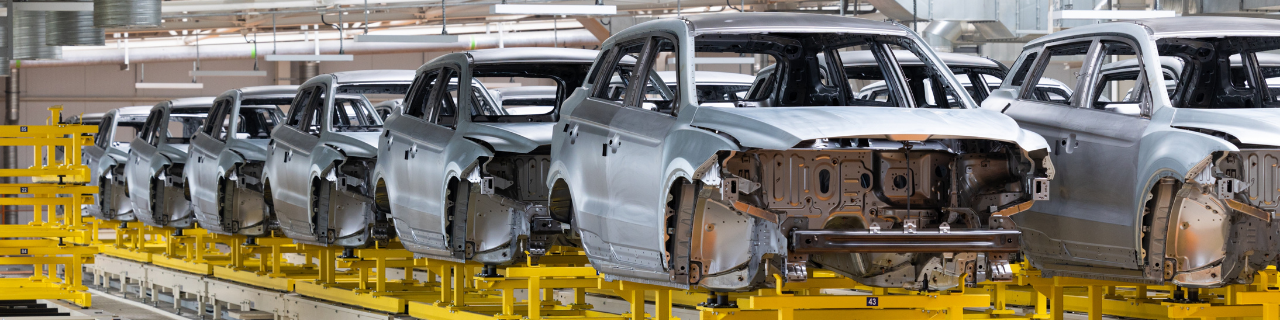
Failure to reach agreement would have exposed the sector to a 25% US tariff on European cars. Automotive exports to the US fell by 17% in 2025, while imports of Chinese electric vehicles rose by 50%. Germany imported more cars from China than it exported there for the first time.
However, a downside scenario would see the deal unravel after July, triggering renewed tariff escalation, potential EU retaliation, and a sector-specific trade war.
European carmakers are already being squeezed on both sides. Chinese imports are gaining market share domestically, while access to the US market is becoming more restricted. A 25% tariff would have been a severe shock. Turnberry is not a complete solution, but it does ease pressure on one side.
Across other sectors, EU imports from China also increased, particularly in batteries, machinery, electronics, textiles and consumer goods. At the same time, exports to the US declined in almost all sectors except pharmaceuticals.
Taken together, these trends point to a broader structural challenge: European industry is under simultaneous pressure from both the US and China, contributing to a gradual erosion of competitiveness despite continued trade growth.
Against this backdrop, the hope is that Turnberry will help address Europe’s competitiveness challenge. However, there is a clear downside risk that the agreement could unravel, triggering renewed trade tensions.
An outcome as such would affect both economies. Europe may be more exposed, given the lingering impact of the recent energy shock. That said, the United States also has strong incentives to maintain the deal. Rising prices are weighing on US consumers, and midterm elections are approaching.
Despite this mutual interest, confidence remains fragile. European policymakers continue to view the US as an unpredictable partner under the current administration. As a result, the agreement includes multiple safeguards designed to protect against non-compliance.
A key risk is partial compliance, whereby the United States maintains elevated tariffs in specific sectors while formally adhering to the agreement. This raises concerns that Washington may signal cooperation while failing to fully honour the spirit of the deal.
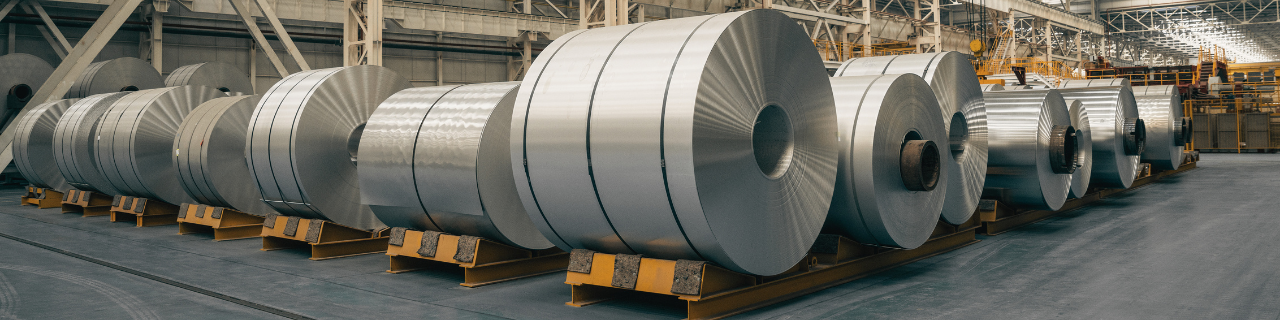
US commitment will be tested quickly. In April, the Trump administration introduced tariffs of up to 50% on steel and aluminium, and EU producers are not currently exempt. European negotiators have secured provisions allowing the agreement to be suspended at the request of Parliament or a Member State if these tariffs are not reduced by the end of the year.
Up to half of EU-produced steel and aluminium could face tariffs of as much as 50%. Producers expect these to align with a 15% ceiling; if not, it would be a major setback and a direct threat to the agreement.
“The European Commission estimates that up to half of EU-produced steel and aluminium could be affected by tariffs of up to 50%,” says Bodnar. “This includes not only raw materials but also a wide range of downstream products. Producers expect these tariffs to fall in line with the 15% ceiling. If that does not happen, it would represent a major setback and a direct threat to the agreement.”
The presence of the suspension clause is not the only safeguard included in the text. Brussels could also suspend tariff cuts if sharp rises in US imports threaten European industry, and a sunset clause will see the agreement expire in 2029 if it is not renewed.
.2026-06-05-09-40-37.png)
The longer-term outlook is further complicated by developments in US trade policy. In February, the Supreme Court ruled against the use of the International Emergency Economic Powers Act to impose tariffs, casting doubt on the legal basis of existing measures.
At the same time, the US has increasingly used tariffs as an active policy tool. Temporary measures, including a blanket 10% rate potentially rising to 15%, have been introduced and are also subject to legal challenge. This combination of legal uncertainty and policy volatility reinforces the fragility of the current framework.
Depending on how exemptions are applied, a 10% blanket tariff could slightly reduce the effective burden on EU exports compared to Turnberry, while a 15% rate would increase it. It remains unclear how these regimes would interact in practice.
In the end, European lawmakers made no mention of geopolitical tensions in the ratification text, though a clause connecting US aggression with the demise of the deal had been widely discussed. The issue remains at the forefront of European minds. Washington’s focus may be elsewhere for now, but the Greenland issue has the potential to scupper the Turnberry agreement and reignite a transatlantic trade war.
In this context, the EU’s decision to move ahead with implementation represents a cautious step towards stabilising transatlantic trade. The agreement is imperfect, but may provide a degree of short-term certainty.
However, its durability remains in question. US trade policy remains unpredictable, structural tensions persist, and legal challenges could undermine key elements of the framework. The Turnberry agreement seeks to create stability from chaos, but EU-US trade faces an uncertain future regardless.
To explore how to strengthen your own credit risk strategy, get in touch with us and see how we can help you stay ahead.


